Google Business Profile: The Local SEO Checklist You Need

Local search is competitive, and if your Google Business Profile isn't optimized, you're leaving visibility (and customers) on the table. You don't need a huge budget or a technical background to make it work, you just need to know what actually matters and be willing to put in a little consistent effort!
Why Google Business Profile Matters for Local SEO Optimization
Your Google Business Profile (formerly Google My Business) is often the first thing potential customers see when they search for businesses like yours. It shows up in Google Maps, local search results, and even the Knowledge Panel on the right side of desktop searches.
Here's what makes it so powerful:
It influences local rankings. Google uses your profile to determine how relevant your business is to local searches. The more complete and active your profile, the better your chances of showing up.
It builds trust fast. Reviews, photos, business hours, and responses to customer questions all help people decide whether to contact you or keep scrolling.
It drives real actions. People use your profile for directions, calling you directly, or visiting your website. These are high-intent actions that lead to actual business.
If you're not actively managing your Google Business Profile, you're giving competitors an easy advantage.
Google Business Profile Optimization Checklist
Let's break this down into steps you can actually take. Whether you're setting up a profile for the first time or trying to improve an existing one, this checklist will help you strengthen your local SEO optimization strategy.
1. Claim and Verify Your Profile (If You Haven't Already)
This seems obvious, but you'd be surprised how many businesses still haven't claimed their Google Business Profile. If you haven't done this yet, start here.
Go to google.com/business and search for your business. If it exists but isn't claimed, follow the steps to claim it. Google will verify ownership, usually through a postcard sent to your business address or a phone call.
Once verified, you have full control over what shows up when people find you.
2. Fill Out Every Section Completely
Google rewards profiles that are thorough and up to date. Incomplete profiles don't rank as well and don't inspire confidence.
Make sure you've filled out:
Business name: Use your actual business name. Don't stuff keywords here (Google penalizes that).
Category: Choose the most accurate primary category, then add secondary categories if they apply. This tells Google what you do and helps match you to relevant searches.
Address and service area: If you have a physical location customers visit, list your address. If you're service-based and travel to customers, set your service area instead.
Phone number: Use a local number whenever possible. Consistency across your website and other directories matters too.
Website URL: Link to your homepage or a dedicated landing page optimized for local search.
Business hours: Keep these updated, especially around holidays. Nothing frustrates customers more than showing up to a closed business.
Attributes: These are the small details like "wheelchair accessible," "free Wi-Fi," or "women-led." They help customers filter results and can make your business stand out.
Every blank field is a missed opportunity for local SEO optimization. Fill them all.
3. Write a Strong Business Description
Your business description is one of the few places you can tell your story in your own words. You have up to 750 characters, and you should use them strategically.
Focus on what makes you different, who you serve, and what problems you solve. Include your primary keywords (or whatever's relevant to your business) naturally, but don't overdo it.
4. Add High-Quality Photos (and Keep Adding Them)
Photos are one of the most underrated parts of local SEO optimization. Businesses with photos get significantly more clicks, calls, and direction requests than those without.
Here's what to include:
- Exterior photos so people know what to look for when they arrive
- Interior photos that show your space and set expectations
- Team photos to add personality and build trust
- Product or service photos that showcase what you offer
- Action shots of you or your team working with customers
Fresh content signals that your business is active and engaged.
Tip: Make sure photos are well-lit, in focus, and represent your brand well. Blurry phone pics don't inspire confidence.
5. Collect and Respond to Reviews
Reviews are a huge ranking factor for local search, and they heavily influence whether someone chooses your business over a competitor.
Here's how to approach reviews strategically:
Ask for them. After a successful project or positive experience, ask happy customers to leave a review. Make it easy by sending them a direct link to your Google Business Profile.
Respond to every review. Thank people for positive reviews and address concerns in negative ones. This shows you're engaged and care about customer experience.
Don't fake them. Google is good at detecting fake reviews, and getting caught can damage your rankings and reputation.
Be consistent. A steady flow of recent reviews matters more than a burst of old ones. Build review generation into your customer journey.
Reviews also give potential customers the social proof they need to take action.
6. Use Google Posts to Stay Active
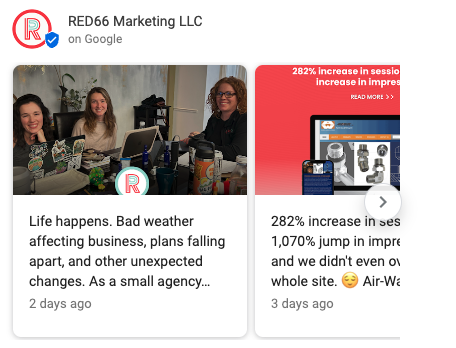
Google Posts are short updates that appear directly in your profile. Think of them like mini social media posts that live on Google.
You can use them to:
- Share blog posts or helpful content
- Highlight new products or services
- Post updates about events or community involvement
Posting once or twice a week shows Google and potential customers that your business is active.
This is a simple way to boost engagement and keep your profile fresh without a lot of effort.
7. Keep Your Profile Updated
This is where a lot of businesses fall short. They set up their Google Business Profile once and never touch it again.
But local SEO optimization isn't a one-and-done task. Google rewards profiles that stay current.
Make it a habit to:
- Update holiday hours in advance
- Add new photos regularly
- Post updates or offers
- Respond to new reviews
- Check for and correct any inaccurate information
Set a reminder to review your profile monthly. It takes 10 minutes and keeps you competitive.
8. Monitor Your Insights
Google provides free analytics for your Business Profile. Use them.
You can see:
- How people found your profile (direct search vs. discovery search)
- What actions they took (calls, website visits, direction requests)
- Where your views are coming from
This data helps you understand what's working and where you can improve. If you're getting a lot of views but few actions, that's a signal that something in your profile needs work.
Insights also show you which search terms people used to find you. This can inform your broader local SEO optimization strategy and help you better understand your audience.
Common Mistakes to Avoid
Even with the best intentions, it's easy to make mistakes that hurt your local SEO optimization efforts. Here are a few we see often:
Inconsistent business information. If your name, address, and phone number don't match across your website, social profiles, and directories, it confuses Google and weakens your rankings.
Ignoring negative reviews. Not responding to criticism makes you look unresponsive. Address concerns professionally and show you care about making things right.
Keyword stuffing. Don't add keywords to your business name or stuff them unnaturally into your description. Google penalizes this and it looks spammy.
Setting and forgetting. Your profile needs regular attention. Businesses that stay active rank better and convert more visitors.
Using a PO box or virtual address. Google prefers real, verifiable business addresses. If you're service-based, use service area settings instead.
Avoid these pitfalls and you're already ahead of most competitors.
How Google Business Profile Fits Into Your Bigger Local SEO Strategy
Your Google Business Profile is powerful, but it's just one piece of a complete local SEO optimization strategy.
To really dominate local search, you also need:
- A website optimized for local keywords
- Consistent citations across online directories
- Local content that answers questions your customers are asking
- Backlinks from other local businesses or organizations
- A mobile-friendly site that loads fast
At RED66, we help businesses build strategies that bring all these pieces together. Google Business Profile optimization is often where we start because it delivers quick wins, but the real impact comes from a coordinated, ongoing effort.
Bringing Your Local SEO Strategy Full Circle
Your Google Business Profile is one of the most valuable local SEO tools you have. It's free, it's effective, and when optimized correctly, it puts your business in front of people who are ready to take action.
The businesses that win in local search aren't always the biggest or the oldest. They're the ones that show up consistently, stay active, and make it easy for customers to find and trust them.
If you're not sure where your profile stands or want help building a local SEO optimization strategy that actually drives results, we're happy to talk. Because local search is competitive, and the businesses that stay ahead are the ones that treat visibility as an ongoing priority, not a one-time task.