Landing Page Optimization: Why Your Paid Ads Shouldn’t Direct to a Contact Page
The right landing page can be the difference between a paid ads budget that grows your business and one that quietly drains away. If you’re running paid ads, you’ve already done the hard part. You’ve targeted the right keywords, tightened your geo-targeting, and written copy sharp enough to earn clicks.
Once someone clicks, the place they’re sent matters just as much as the ad that got them there in the first place. All too often, where they’re sent is a contact page, a page that was never built for the person who just clicked that specific ad. The good news is that this is one of the most fixable parts of any paid ads campaign. Get it right, and you can lift your results without having to increase your ad budget.
Here’s how we think about landing pages at RED66, and how you can put the same approach to work for your business.
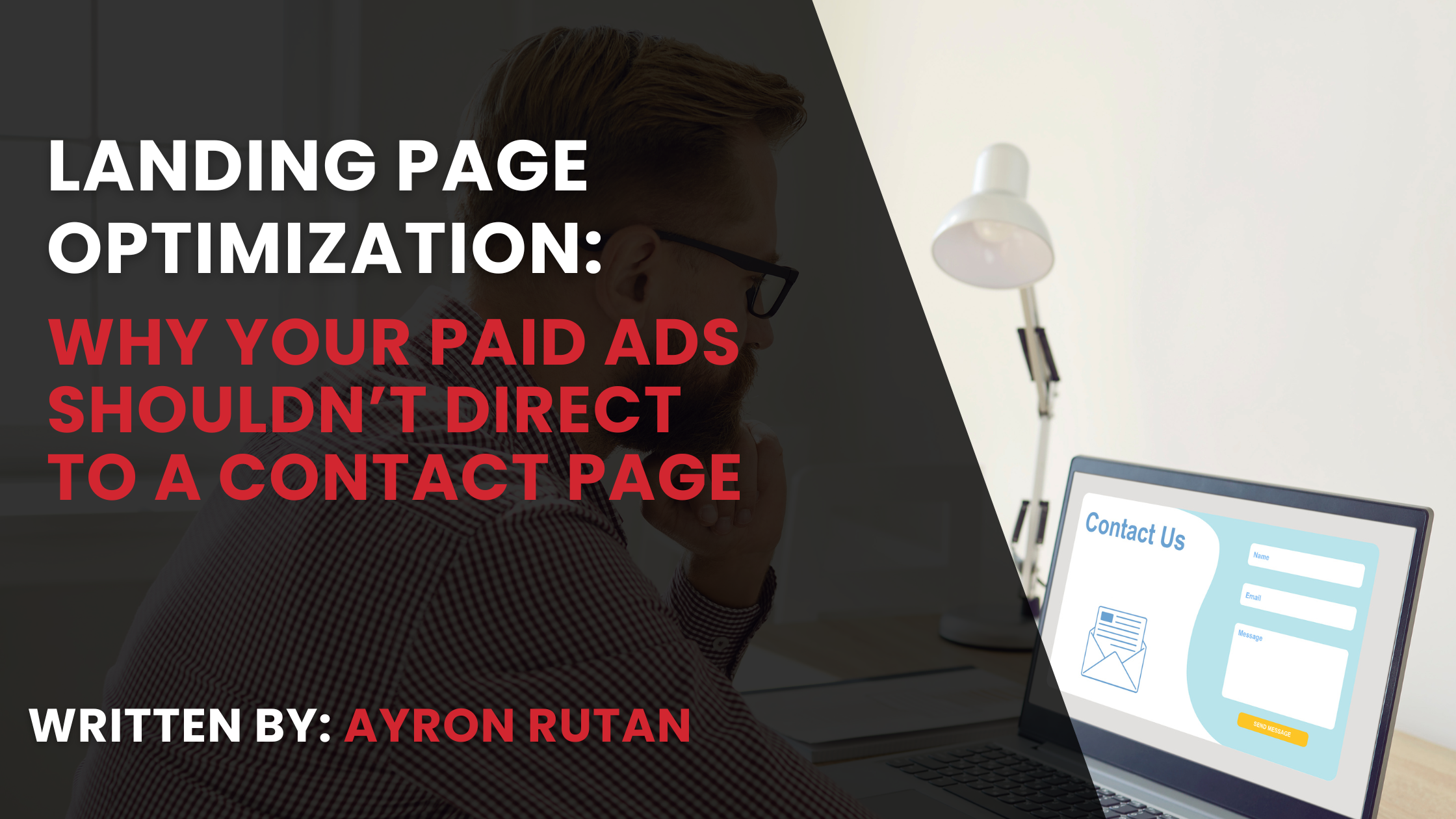
Why a Contact Page Falls Short For Paid Traffic
A contact page has one job: it lets people who already decided to reach out do exactly that. The challenge is that your paid visitor hasn’t decided yet. They’re still weighing whether you’re the right fit.
Think about what that visitor just did. They searched for a specific service, read an ad that made a specific promise, and clicked to learn more about that one thing. A contact page speaks to none of it. It doesn’t confirm that you offer what they searched for, show that you’re good at it, or tell them whether you serve their area. It simply asks them to fill out a form before they have a reason to.
A homepage runs into the same problem from the other direction. It’s built to serve every audience at once, so your paid visitor has to dig for the one service they care about (and most won’t take the time). When that happens, they leave, and the budget you worked hard to spend well slips away on arrival. Strengthening that single page is often the quickest win available to a B2B advertiser.
What a Strong Paid-Ads Landing Page Includes
A landing page built for paid traffic has one purpose: to carry the promise your ad made all the way to a conversion. A handful of elements make that happen, and they’re all within reach.
It matches the service the ad promised. This is called message match, and it’s the single most important factor. If your ad said “commercial uniform rental,” the headline on the page should say close to the same thing. When the page mirrors the search and the ad, your visitor relaxes, because they know they’re in the right place. When it doesn’t, that flicker of doubt is usually enough to lose them.
It puts the form at the top. There’s no reason to make a ready buyer scroll and hunt for a way to reach you. A short quote form embedded right at the top of the page shows the visitor exactly what to do, and lets the people who are already sold convert in seconds. Everyone else keeps reading, and the form is still waiting when they’re ready.
It shows proof. A national brand can lean on its size. You get to lean on your evidence: reviews, client logs, industry certifications, a genuine testimonial, a result you’re proud of. Proof is what bridges the gap between “this looks relevant” and “I trust these people enough to reach out.”
It shows your service area. Naming the regions, cities, or industries you actually cover answers the question, builds trust, and gently filters out the leads you can’t serve anyway, which lifts quality on both sides.
It makes the quote request simple. Every extra field asks a little more of your visitor. Request only what you genuinely need to start a conversation, and save the rest for later. Right now, the goal is simply to make it easy for the right people to raise their hand.
When these pieces come together, your page stops leaking the traffic you paid for and starts turning it into real conversations.
See how this worked for Guarantee Roofing & Fence
How We Approach It: One Page Per Audience
This is where a thoughtful strategy outperforms a bigger budget. With our clients’ landing pages, we don’t point all of the ads at a single catch-all page. We segment landing pages by audience, then guide each group of searchers to a page built specifically for them.
A company that serves three industries across two regions doesn’t need one page; it needs several, each curated around a single audience and a single conversion goal. For example, the uniform-rental searcher and the linen-service searcher see different headlines, different proof, and different service details, because they’re different people with different needs. Every one of those pages leads with a form embed at the top, so the path from click to quote request stays as short and clear as possible.
This isn’t just a hunch about relevance, either. Recent research from HubSpot found that companies see a 55% increase in leads when they grow from 10 to 15 landing pages, and a business with more than 40 pages see conversions climb by over 500%. More pages means a tighter match between what someone searched for and what they find when they arrive.
We Test, Measure, and Refine
Building the page is the start, not the finish, and this is where our data-driven approach really earns its keep. Opinions about what “should” work on a landing page are easy to come by and frequently wrong, so we let real visitor behavior guide the decisions.
We run intensive testing using tools like Microsoft Clarity and Crazy Egg. Clarity gives us heatmaps and full session recordings, so we can see real visitors move through the page. We can see exactly where they hesitate, scroll past, or drop off. Crazy Egg layers on heatmaps, scroll maps, and A/B testing, so we can put two versions of a page head to head and keep the one that wins.
We’re looking at the things that quietly make or break a page:
- Whether they notice the form, or scroll right past it
- Where their attention gathers
- Whether the proof is doing its job
- Whether a new headline or new copy lifts conversions or sinks them
Then, we adjust and test again. You’ll always understand what we changed and why, because that kind of transparency is exactly how a good page becomes a great one over time.
Real People. Real Results.
It’s one thing to talk through the theory, and another to see it work. A few of our clients tell the story better than we can.
Shine
Before we ran a single ad, we drafted unique, SEO-optimized landing pages for each individual location, built around that location’s services, climate, and local concerns. The landing pages were the strategy. The paid campaigns that ran on top of them delivered a 653% ROI and earned the team a 2023 PRoof Award.
Roscoe Company
Roscoe was already attracting traffic, but the on-page experience was holding conversions back before anyone reached a form. We focused on the page rather than the ads, and saw a 416% increase in conversions in a single month. GA4 confirmed the deeper story: visitors viewed more than twice as many pages per session and spent 43% more time on the site, while Search Console showed the refreshed pages pulling in over a million impressions.
Capitol Uniform & Linen
We rebuilt Capitol Linen’s conversion points and forms to support incoming paid traffic, and the efficiency gains followed. Paid ads returned a 5x ROAS, cost-per-conversion dropped over 73% as the campaigns scaled, and on-site engagement nearly doubled, climbing from 24% to almost 50% in three months.
The common thread isn’t a bigger budget. In every case, the page is what did the converting, and the ads simply got the right people there.
A Quick Way to Review Your Own Landing Pages
You can put your own setup to the test this week. Click one of your live ads as if you were a customer, and ask a few honest questions. Does the headline you land on match what the ad promised? Is a form visible without scrolling? Is there proof on the page that you’re worth trusting? Does it confirm you serve this person’s area? Count the form fields, and trim the ones you don’t truly need, and let the data fill in the rest.
Pull up your landing page behavior in GA4 and a heatmap tool, and notice where paid visitors lose interest. If they bounce right away, you likely have a message-match problem. If they engage but never reach the form, there’s friction to smooth out. If every ad in your account points at the same page, that’s your biggest opportunity, as one curated page per audience will almost always outperform a single page trying to serve everyone.
See Exactly Where Your Paid Budget Is Leaking
Reviewing your own landing pages is a great start, but it only shows part of the picture. The rest lives inside your ad account, in the wasted spend, weak lead quality, tracking gaps, and missed opportunities that are easy to overlook when you’re close to the work every day.
So we put together a sample of our PPC audit to show you exactly how we review a paid ads account: what we look at, the problems we flag, and how we turn those findings into a clear plan for better performance. It’s a real preview of our process, not a generic checklist, and all it takes to see it is your email.
Get The Example of Our PPC Audit →
Best fit for companies spending $1,500+/month on paid ads, or preparing to launch with a similar monthly budget.
Let’s Make Your Clicks Count
The click is the part you pay for, and the page is the part that pays you back. A generic contact page treats your most ready visitors like an afterthought, and there’s an easier, more rewarding path available.
A page built for the moment does the opposite. It mirrors the promise that earned the click, proves you can deliver, confirms you’re the right fit, and makes saying yes effortless. That’s how B2B companies turn paid traffic into a steady stream of qualified leads, no national-sized budget required.