Why Your Website Isn’t Turning Visitors Into Sales Opportunities

Picture this: Your website is getting tons of traffic. The reports show people visiting, pages getting views, sessions ticking up. But the phone isn’t ringing any more than it used to, contact forms aren’t being submitted, and hardly anyone is requesting a quote. So where is everyone going?
We’ve seen this pattern time and time again, so if you’ve experienced this you’re certainly not alone. The good news is, the fix is easier than you might think. You don’t need to be an expert or care about terms like “conversion rate optimization” to solve this problem. The gap between a site that gets traffic and one that generates leads almost always comes down to a handful of fixable issues. Let’s walk through them together, and show you how to spot them in your own data.
Traffic Is Not The Same As Leads
It’s easy to assume that more visitors will eventually mean more business. However, a visit that doesn’t turn into a call, a form, or a quote request is just a number on a chart. The real question isn’t how many people show up, it’s how many of them make a decision while they’re there.
The unfortunate truth is that most don’t. Across B2B, the average website turns about 2.9% of visitors into leads, with typical ranges of 1%-3% (depending on the industry and traffic source). Top-performing sites and optimized landing pages often achieve 4%-7%+, and in some sectors can exceed 10% on high-intent traffic. That range is exactly why this matters so much. Even a few small fixes to your site can meaningfully increase the opportunities you get from the exact same traffic. The problem is rarely that too few people are visiting, it’s almost always what happens after they arrive.
Why Visitors Aren't Converting
In our experience building and fixing B2B websites, the same culprits show up again and again. See how many sound familiar to you.
Your Message Isn't Clear
When someone lands on your site, they decide in a few seconds whether or not they’re in the right place. If your homepage leads with something vague like “solutions that drive results,” it communicates very little. Visitors should immediately understand what you do, who you help, and why you’re a good fit, in language a normal human would use. Put yourself in a customer’s shoes: if you weren’t super familiar with your company’s services, would you understand what your copy is saying?
Your Phone Number Is Hard To Find
For a lot of B2B service buyers, the fastest path is simply to call. If your phone number is buried in a footer or hidden three clicks deep, you’re adding friction at the exact moment someone is ready to reach out. Put it where people expect it, and make it tap-to-call on mobile.
Your Forms Are Working Against You
Forms are where a lot of leads can die without a single peep. Ask for too much, users get frustrated and abandon it halfway through. Ask for too little, and your sales team drowns in junk inquiries. The goal is a short form that collects just enough to start a real conversation, a balance we dig into in our guide to landing page optimization.
Your Service Pages Are Vague
A page with generic copy such as “we offer a range of services” gives a visitor virtually nothing to grab onto. Specific service pages that speak to a real problem, in the words people actually search for, convert better and rank better. If a prospect can’t quickly confirm you do or offer the exact thing they need, they’ll assume you don’t.
The Proof Is Missing
People don’t hand over their contact info to a company they don’t trust yet, and in B2B that bar sits especially high. A consumer might make a quick, emotional purchase, but a business buyer is usually factoring in other variables, such as answering to other stakeholders or making a large purchase for a long-term need. Because of this, they often do plenty of homework before reaching out. In fact, B2B buyers complete roughly 61% of their decision before contacting a single vendor, and 59% of them read reviews as part of that process. That means your website has to earn trust while no one is watching. Reviews, recognizable client logos, certifications, case studies, and real results do that quiet work, reassuring a cautious buyer long before they’re willing to fill out a form. A site with no proof asks visitors to take a leap of faith, and most simply won’t.
The Mobile Experience Is Rough
A large share of your visitors are on their phones, and they have no patience for a slow or clunky page. Google’s research found that as a page’s load time grows from one second to three, the chance a visitor bounces jumps 32%. If your site is hard to read, tap, or submit a form on from a phone, you’re losing leads before they ever had a chance.
There's No Clear Next Step
More leads isn’t the goal, the right leads are. Audit what your forms are actually producing, and ask yourself: Are they qualified inquiries, or a pile of junk your sales team has to sort through? Adding a qualifying field or two, excluding the wrong geographies, and feeding closed-deal data back into the platform you’re using all sharpen who your ads attract. When we rebuilt Capitol Uniform & Linen’s conversion points, cost-per-conversion dropped by over 73% as the leads got both cheaper and better.
Let GA4 Show You Where You're Losing Visitors
Luckily, you don’t have to guess which of these is hurting you. Thanks to platforms like GA4, your data will point right at the problem if you know what to look for. A few signals that matter most:
- Top landing pages: the pages where visitors actually arrive first. Are they the pages you’d want making a first impression?
- Engagement rate: are people genuinely engaging with a page, or leaving almost immediately?
- Key events: are your form submissions, calls, and quote requests actually being tracked, so you can see what’s working? (If they aren’t set up, that’s problem number one.)
- Traffic sources: which channels send visitors who act, versus ones who just browse and bounce?
- High-traffic, low-lead pages: the single most useful thing to find. A page lots of people see but almost no one acts on is your biggest and clearest opportunity.
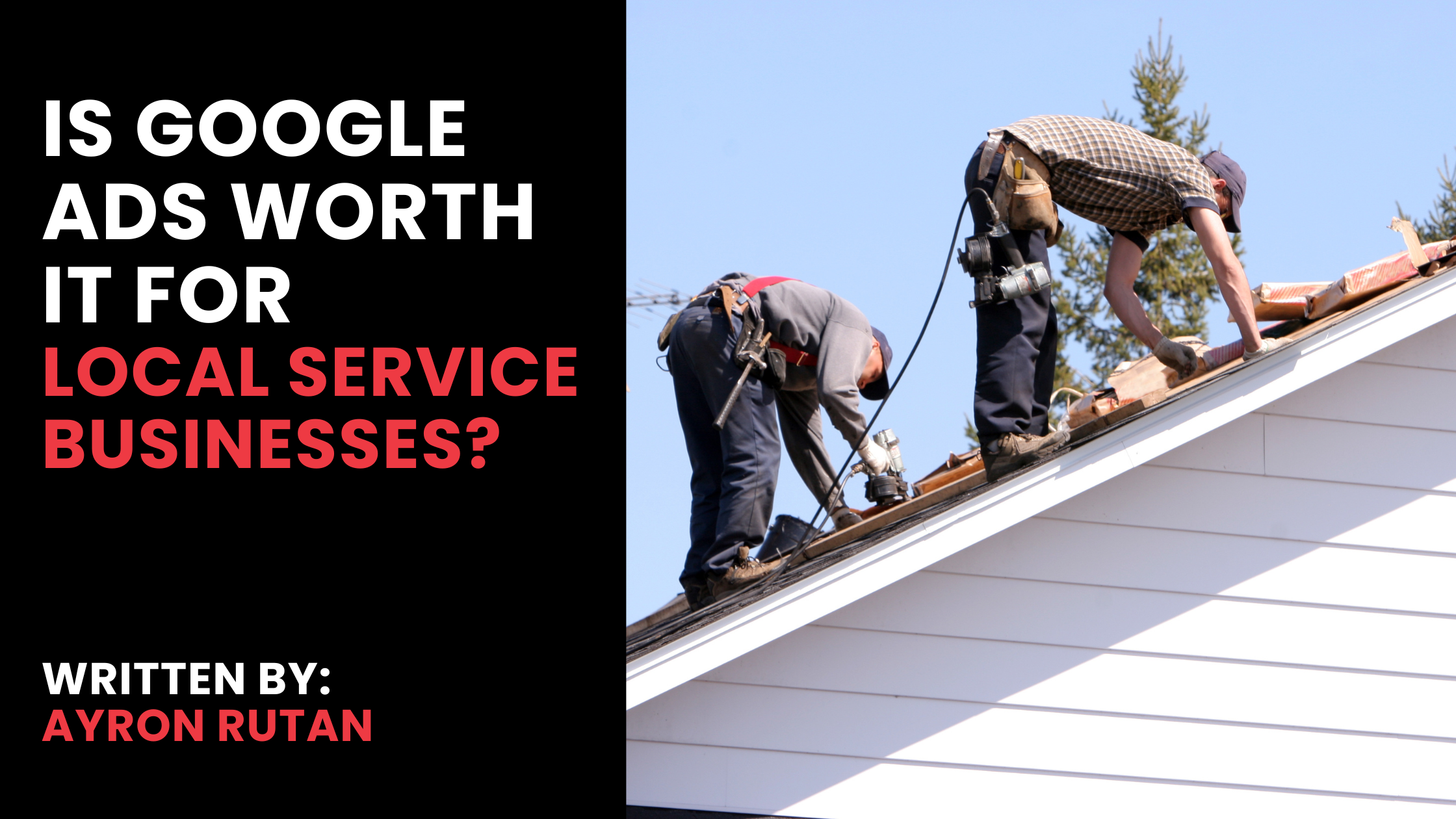
This is the same reporting discipline we lean on when judging paid campaigns in our recent blog: Is Google Ads Worth It For Local Service Businesses?. If your view of the website stops at “we got traffic,” you’re working with half the picture.
What Fixing It Looks Like
When the page starts doing its job, the results can be dramatic without changing how many people visit.
Our work with Roscoe Company is the clearest example. Their site was attracting plenty of traffic, but a cluttered layout, unclear messaging, and dated content were stopping visitors from ever reaching a form. We treated the website like the salesperson it should be, and improving the experience produced a 416% increase in conversions in a single month. GA4 confirmed the shift, showing that visitors viewed more than twice as many pages per session and spent 43% more time on the site. Same audience, but now with a page finally built to convert them.
The buck didn’t stop with Roscoe, either. When we rebuilt Capitol Uniform & Linen’s conversion points and forms, on-site engagement climbed from 24% to nearly 50% and their paid ads returned a 5x ROAS. And when Shine® gave each of their locations a clear, specific page instead of a generic one, the campaigns built on top delivered a 653% ROI. Clearer messaging, stronger proof, and an obvious next step don’t just lift numbers, they bring in better opportunities.
A Simple Place To Start
You can begin this week without any special tools. Pull up your highest-traffic page on your phone and look at it like you’re a first-time visitor. Can you tell what your company does within a few seconds? Is the phone number easy to find and tap? Is there any proof that’s worth trusting? Is there an obvious next step? If you answer no to any of these questions, you’ve found something worth fixing.
From there, open GA4 and look for those high-traffic, low-lead pages. Those are where you’re leaking the most opportunity, so that’s where your effort pays off fastest. If you want a structured way to work through the whole funnel, our Paid Ads Audit Checklist covers the tracking and landing page pieces step by step.
Turn Your Website Into Your Top Salesperson
Your website should be your hardest-working salesperson, available every hour of every day to greet visitors, answer their questions, prove you’re the right choice, and make it easy to take the next step. When it isn’t doing that, the fix usually isn’t more traffic. It’s clearer messaging, better proof, and a smoother path to reaching you.
Not sure where your visitors are dropping off? We put together a sample of our PPC audit that shows how we review the full path from click to conversion, including landing page relevance and tracking, so you can see exactly where opportunities are slipping away.
Get the Example of Our PPC Audit →
Best fit for B2B service companies spending $1,500+/month on paid ads, or preparing to launch with a similar monthly budget.